
Record 02
TESSERA
Thermal-infrared to colour for Landsat imagery, for ISRO's Bharatiya Antariksh Hackathon 2026, with a map of where the model is guessing.
- Status
- Research
- Year
- 2026
- Role
- Team leader, team of 4
- Input
- Landsat ST_B10 (thermal)
- PSNR
- 24.84 dB
- Hallucination proxy
- 0.024 (lower is better)
- Time per tile
- 227 ms
Briefing
- Problem
- Colourise single-band thermal Landsat tiles so they are easier to interpret, and show where the colour is a guess.
- What exists today
- A trained two-stage pipeline, evaluated on held-out Landsat test scenes.
- Key result
- Kept the model with the lower hallucination proxy (0.024) over a distilled student with higher PSNR (26.23 vs 24.84 dB) but a proxy of 0.121.
Objective
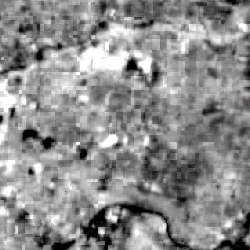
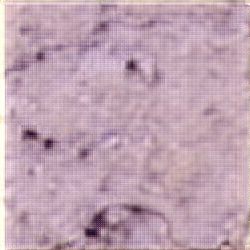
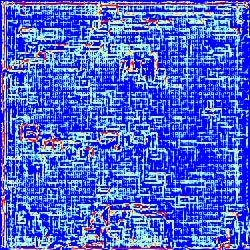
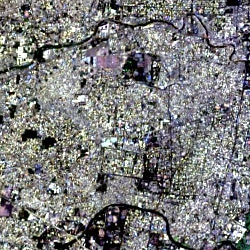
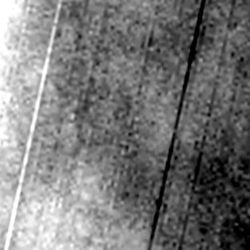
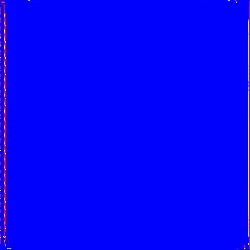
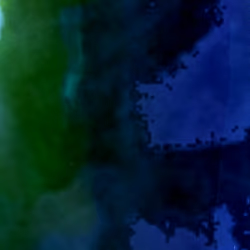
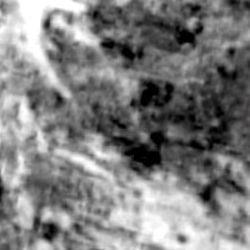
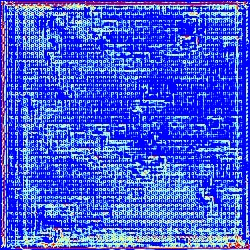
Bharatiya Antariksh Hackathon 2026, Problem Statement 10: colourise and enhance infrared satellite imagery so objects are easier to interpret. A single-band thermal tile goes in; a sharpened infrared image, a colour interpretation, and a per-pixel risk map come out. The risk map marks where the colour is not supported by the input.
Architecture
Schematic
-
Input
- Landsat ST_B10 thermal tile
-
Stage 1
- Infrared enhancement (ResUNet / EDSR-style)
-
Stage 2
- ResUNet colouriser
- Semantic and uncertainty heads
-
Output
- Colour image
- Hallucination-risk map
A teacher that also sees spectral indices (NDVI, NDWI, MNDWI, NDBI) was trained as an upper bound. It is not deployable: the deployed model sees only the thermal band.
Constraints
The challenge allows only the thermal band at inference, so anything else can guide training but never ship. Patches are split by scene and date, so no scene appears in both training and test.
Measurements
Model output, held-out test scenes
-
Input
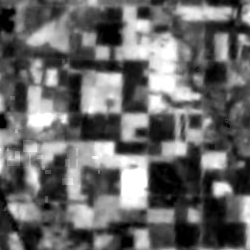
ST_B10 thermal
-
Output
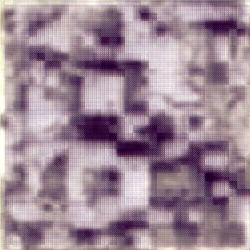
TESSERA RGB
-
Risk map
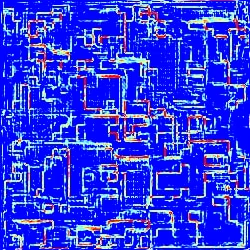
TESSERA risk
-
For comparison
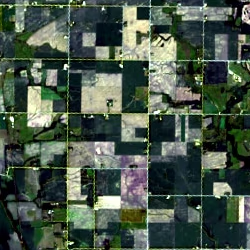
Ground truth RGB
-
Input
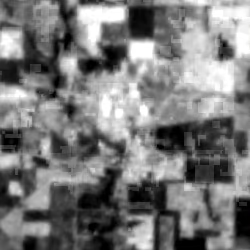
ST_B10 thermal
-
Output
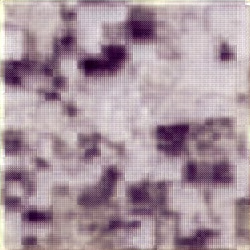
TESSERA RGB
-
Risk map
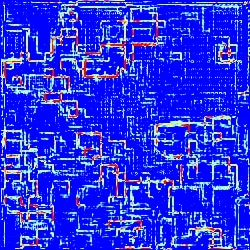
TESSERA risk
-
For comparison
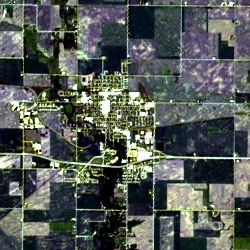
Ground truth RGB
-
Input
ST_B10 thermal
-
Output
TESSERA RGB
-
Risk map
TESSERA risk
-
For comparison
Ground truth RGB
-
Input
ST_B10 thermal
-
Output

TESSERA RGB
-
Risk map
TESSERA risk
-
For comparison
Ground truth RGB
-
Input
ST_B10 thermal
-
Output
TESSERA RGB
-
Risk map
TESSERA risk
-
For comparison
Ground truth RGB
Model output, held-out test set

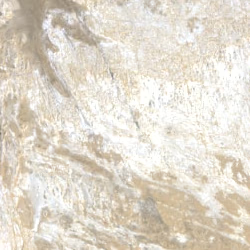
Exact values. PSNR (peak signal-to-noise ratio, in dB) compares the colour output with the true colour image: higher is better. The hallucination proxy scores colour that the thermal input does not support: lower is better.
| Pipeline | PSNR | Hallucination proxy | Time per tile |
|---|---|---|---|
| TESSERA, deployed | 24.835786 | 0.023902 | 226.78 ms |
| With infrared enhancement stage | 24.840277 | 0.023861 | 299.82 ms |
| Distilled student (rejected) | 26.228975 | 0.121392 | 249.57 ms |
Failures and iterations
The baseline, trained on pixel loss alone, painted every land cover the same brown. Temperature does not determine colour, so the loss rewarded the average. That failure motivated the separate enhancement stage, the semantic head, and the risk map.
Distilling the teacher into a thermal-only student raised PSNR, but its hallucination proxy was 0.121 against 0.024, so it was rejected. On the pilot split, the largest model tried (8,748,239 parameters) was worse than the baseline on PSNR and much slower.
Status
Research
End of record R-02
Questions about this record? hello@vedantsomani.tech or open a channel.